Validate your most critical workflows. critical workflows.
Focus automated validation on revenue, safety, and compliance paths that cannot fail in production.
- Catch failures in revenue and trust paths
- Validate real user journeys end-to-end
- Reduce high-impact production incidents
Understand the consequence of every change.
The System Graph continuously models services, APIs, dependencies, infrastructure, agents, models, policies, evidence, ownership, and history, so Zof knows what a proposed action could affect before it is allowed to happen.
CONSEQUENCE
Blast radius
Affected systems, criticality, and controls resolved per change.
TEMPORAL
What changed, when, by whom
History, evidence, and decisions stay queryable.
SUBSTRATE
One graph, whole loop
Verification, evidence, and control read the same model.

What are critical workflows?
Critical workflows are the smallest set of paths that must always work. They are the difference between reliability as a metric and reliability as a business reality.
Critical workflows are
- Revenue-generating paths (checkout, payment, subscription)
- Security-sensitive flows (authentication, authorization)
- Compliance-required sequences (audit, data handling)
- Trust-impacting journeys (account, communication)
- Operational essentials (ordering, fulfillment, recovery)
Not to be confused with
- General feature testing
- UI validation alone
- Unit or integration test coverage
- Generic test suites
- One-time regression sweeps
highest-priority subset Critical workflows represent the highest-priority subsetof your system, where a single failure has outsized business impact.
Why critical workflows fail in production
Traditional testing catches individual bugs. Critical workflows break because of how systems interact under change.
End-to-end workflows span many systems
A failure in any service, API, or integration breaks the entire path.
Changes break downstream dependencies
Updates in one service can silently break dependent workflows.
Unit and integration tests miss real sequences
Isolated tests cannot validate multi-step user journeys.
Edge cases surface only under real conditions
Production traffic patterns expose failures that synthetic tests miss.
Failures impact revenue, security, or compliance
A broken checkout, auth flow, or audit trail is not just a bug. It is a business risk.
What enterprises must validate
Critical workflow validation goes beyond coverage metrics. It requires validating business impact and risk containment.
End-to-end execution across services
Validate complete user journeys that span multiple systems, APIs, and data stores.
Data correctness at every step
Ensure data integrity and transformation accuracy throughout the workflow.
Error handling and recovery paths
Test graceful degradation, retry logic, and fallback mechanisms.
Performance and latency validation
Measure response times at each step to catch degradation before users do.
Behavior under real-world conditions
Validate under realistic load, edge cases, and production-like environments.
Continuous validation as systems evolve
Re-validate after every change to catch regressions immediately.
How Zof validates critical workflows
Zof provides a systematic validation layer for your most important business paths. Not just a test runner, but a safeguard for your business.
Identification of critical paths
Work with your team to identify and prioritize the workflows that matter most to your business.
Continuous journey validation
Validate real user journeys continuously on every PR, every merge, every scheduled run.
Automated execution across environments
Run validations across staging, pre-production, and production-like environments automatically.
Early regression detection
Catch breakpoints and regressions before they reach production. Know exactly what changed and what broke.
Repeatable validation as systems evolve
Workflows stay validated as your architecture, dependencies, and features change over time.
Zof positions as a confidence layer before production : a system-level validator that ensures your critical workflows work before customers depend on them.
Where critical workflows fit
Critical workflow validation complements, but is distinct from, other testing and reliability disciplines.
End-to-end testing
Critical workflows are the highest-priority subset of E2E tests: the paths that must never fail.
Continuous delivery
Critical workflow validation provides the confidence gate that enables safe, frequent releases.
Reliability and scalability testing
Critical workflows are validated for reliability under load and realistic conditions.
Monitoring and observability
Monitoring detects failures after they happen. Critical workflow validation prevents them before.
Key insight: Critical workflows are the highest-priority subset of all testing. When these paths fail, the business impact is immediate and outsized.
Value by role
Critical workflow validation delivers specific outcomes for every stakeholder in the organization.
VP Engineering
Reduce production incidents that disrupt teams, damage velocity, and require executive attention.
Fewer high-impact incidents
CTO
Ensure the technical systems that power revenue, security, and compliance work reliably.
Protection of core business operations
SRE / Platform
Catch failures before they page your on-call team. Shift from reactive to proactive reliability.
Earlier detection of systemic failures
Product / Business
Protect customer experiences that directly impact revenue, retention, and brand reputation.
Revenue and trust protection
Workflow validation lifecycle
A clear, repeatable process for protecting your most important workflows.
01
Identify
Map the critical paths in your system that must always work.
02
Validate
Execute end-to-end validations across all environments.
03
Monitor
Track results, detect regressions, and alert on failures.
04
Repeat
Re-validate continuously as your system evolves.
Enterprise-ready
Built for organizations that require security, compliance, and operational excellence.
Security-first architecture
Review access controls, deployment boundaries, and verification evidence with your security team.
Enterprise governance
Role-based access control, audit logging, and compliance reporting.
Dedicated support
24/7 support, custom onboarding, and dedicated customer success.
Deployment planning
contracted uptime SLAs and monitoring and monitoring.
Workflow sessions
Validation patterns for mission-critical workflows and regulated delivery paths.
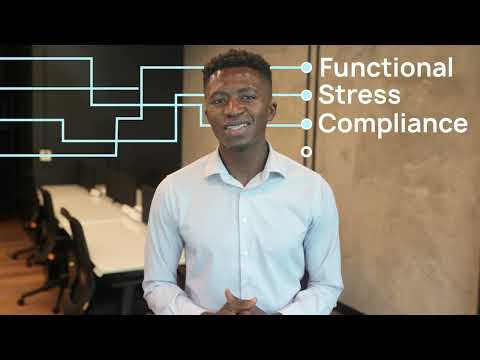 1:00Enterprise QA
Scaling Quality Assurance for Enterprise
How AI-powered continuous verification scales enterprise software validation, expanding coverage, accelerating releases, and preventing production incidents with quality intelligence and release confidence.
Watch session 0:48Security & Compliance
Continuous Security and Compliance Validation
How Zof AI continuous verification delivers security and compliance coverage across every release, surfacing critical issues before production with evidence-based validation and governed remediation workflows.
Watch session
Protect what matters most
Validate the workflows your business depends on. Reduce risk. Ship with confidence.
- 30-minute demo tailored to your critical workflows
Related
Explore related capabilities and solutions